
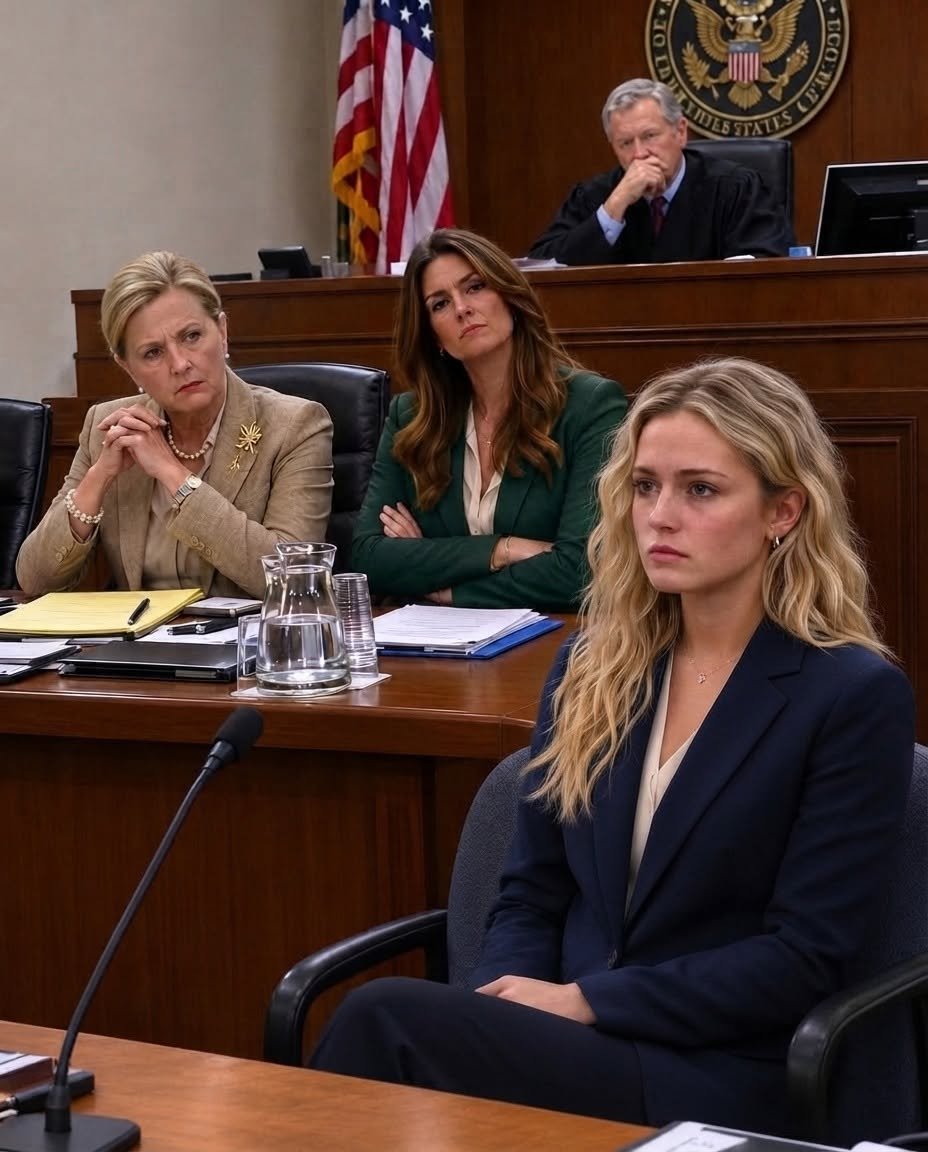
People who saw something in me without requiring me to become extraordinary first.
I pressed the letter against my chest.
“Why didn’t anyone tell me?”
Judge Morland’s expression softened.
“Because sometimes support works best when it doesn’t become another debt.”
That sentence stayed with me.
Years later, when I became a partner at Mercer, Vale & Bishop, my name appeared on the glass doors.
Claire Hamilton.
On the first morning, I stood outside staring at it.
Not because I needed my family to see it.
Not anymore.
A young associate hurried up behind me carrying three case files, looking terrified.
“Ms. Hamilton?”
I turned.
“Claire.”
She blinked.
“Sorry?”
“Call me Claire unless we’re in court.”
She smiled nervously.
“Okay.”
Then she glanced at my name on the door.
“Does that ever stop feeling strange?”
I thought about sixteen-year-old me.
Community college.
Suffolk.
The hearing.
My grandmother’s letter.
Judge Morland.
Brenda.
My mother admitting that pride had mattered more than truth.
“No,” I said.
“Good strange?”
I opened the door.
“Earned strange.”
She laughed.
We went inside.
Only three things hung on my office wall.
My law license.
My grandmother’s note.
And the first scholarship recipient’s thank-you card.
Not Fitzgerald.
Not my awards.
Not the magazine profiles that came later.
Those weren’t what reminded me who I was.
One rainy evening, long after everyone else had gone home, I sat alone preparing for trial.
Boston glowed beyond the windows.
My phone buzzed.
A message from Brenda.
Mom found another box. Apparently she saved your high school debate certificate too. She is becoming an archivist in her old age.
I laughed.
Then another message came.
Also, for the record, I remember that dinner when you were sixteen.
My fingers stopped.
Then a third.
Mrs. Crawford asked what you wanted to do. Mom answered community college. You looked at me afterward like you wanted to disappear.
I stared at the screen.
Another appeared.
I laughed. I have thought about that laugh a thousand times. I’m sorry.
I typed back.
I remember.
The dots appeared.
Disappeared.
Appeared again.
Finally:
I know.
I looked across the rainy city.
For years, I imagined healing would mean forgetting that laugh.
Now I understood healing meant remembering it without hearing my worth inside it.
I typed one final sentence.
Good night, Brenda.
Her reply came immediately.
Good night, Claire.
I set the phone down.
The office settled into silence.
Rain traced silver lines down the windows.
On my desk lay a case file for a client everyone had already decided was guilty.
I opened it.
Page one.
Facts.
Evidence.
Contradictions.
The work.
The same work that had saved me from living inside other people’s assumptions.
I smiled.
Then the young associate called from the hallway through my half-open door.
“Claire?”
“I thought you went home.”
“So did I.”
She appeared holding a folder.
LA SUITE DANS LA PAGE SUIVANTE
